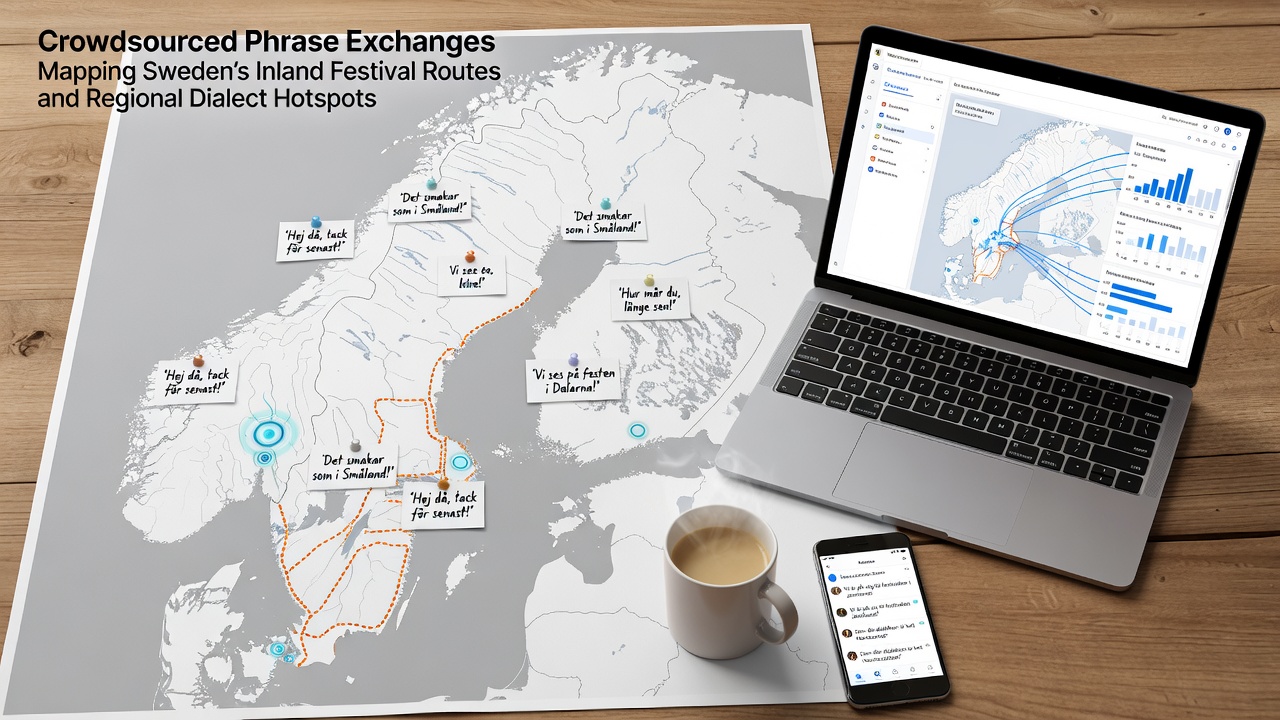
Crowdsourced Phrase Exchanges Mapping Sweden's Inland Festival Routes and Regional Dialect Hotspots
Platforms dedicated to crowdsourced phrase exchanges have collected thousands of regional expressions from inland Sweden and these contributions now form digital overlays that trace festival routes through areas such as Dalarna, Värmland and Jämtland. Users submit audio clips and written variants of local sayings while algorithms cluster the data by phonetic markers and geographic tags to reveal pathways that connect midsummer gatherings, harvest fairs and winter markets. Research from the Institute for Language and Folklore indicates that over 12,000 unique phrases entered the system between 2023 and 2025 and the majority originated from counties north of Lake Vänern.
How Phrase Contributions Build Route Maps
Participants record short dialogues or isolated terms that locals associate with specific events and the platform tags each entry with latitude and longitude coordinates. When enough entries accumulate along a corridor the system generates suggested travel segments that festival organizers later adopt for shuttle services and walking tours. Data from Statistics Sweden shows that inland municipalities recorded a 28 percent rise in visitor inquiries about dialect workshops during the 2025 season and many of those queries traced back to the same exchange platforms.
Festival committees in Rättvik and Östersund now cross-reference the phrase clusters with transportation logs and they adjust bus timetables to pass through villages where certain vowel shifts remain strongest. Observers note that the resulting maps highlight not only the physical roads but also the linguistic boundaries that separate one valley's vocabulary from another's.
Regional Dialect Hotspots Identified Through User Data
Analysis of submitted phrases points to several persistent hotspots where unique lexical items survive in everyday use. Around the Siljan ring the word for traditional bread retains distinct endings that differ from those recorded fifty kilometers east while the Härjedalen entries frequently feature consonant clusters absent in neighboring districts. These patterns emerge because contributors tag their submissions with both location and age group and researchers can therefore track generational transmission rates.
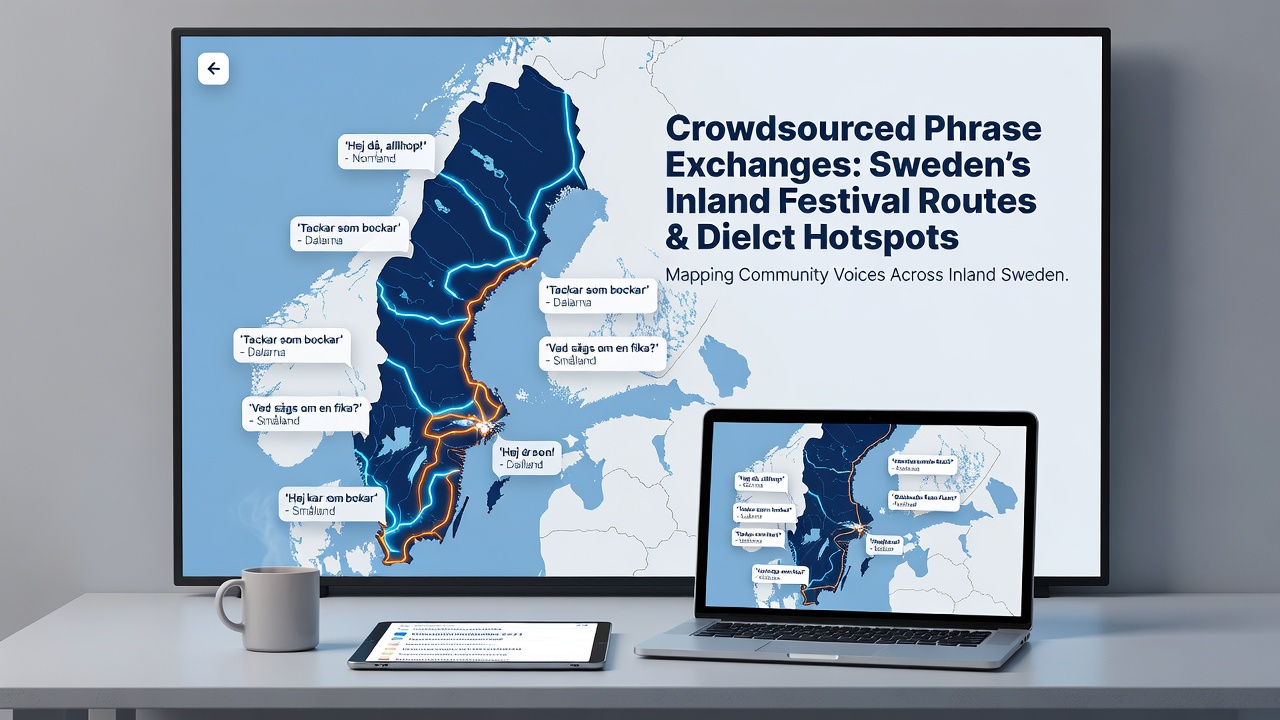
Academic teams at Uppsala University have begun integrating the crowdsourced datasets with historical recordings from the early twentieth century and preliminary comparisons reveal that certain expressions once thought extinct have reappeared in festival contexts. The project publishes quarterly heat maps that festival planners consult when selecting performance sites and market stalls.
August 2026 Festival Preparations and Platform Activity
Event organizers have already scheduled several large gatherings for August 2026 along routes flagged by the phrase-exchange networks. In the village of Leksand a three-day event will feature guided walks that stop at households still using older forms of greeting and participants receive digital phrase cards generated from the platform. Similar programming appears in Strömsund where local archives supply additional context for the expressions that users have uploaded most frequently.
Traffic analytics from the main exchange site show that searches for phrases associated with August events increased by 41 percent in the first quarter of 2025 and many of those queries originated from users outside Sweden. The platform responds by offering multilingual glossaries that link dialect terms to their nearest standard Swedish equivalents while preserving original pronunciation files.
Integration With Tourism and Academic Research
Regional tourism boards have begun embedding the phrase maps into official apps so travelers can listen to local variants while following suggested routes. A joint study conducted with the European Centre for Modern Languages examined how such tools affect visitor dwell time and the report concluded that users who engaged with at least five dialect entries stayed an average of 1.7 days longer than those who did not. The findings appear in open-access publications that other Nordic countries have started to reference when developing similar projects.
Continued growth depends on sustained user contributions and platform developers have introduced verification badges for frequent submitters who provide geolocated audio of verified quality. These badges appear beside entries that festival organizers later cite when designing signage and printed programs.
Conclusion
Crowdsourced phrase exchanges continue to supply granular data that links linguistic variation directly to the physical routes of inland Swedish festivals. As more contributors add recordings and as organizers incorporate the resulting maps into logistics the system expands its coverage of dialect hotspots each season. August 2026 events will test the latest iterations of these tools and the outcomes will shape how future gatherings present regional language alongside music and food traditions.